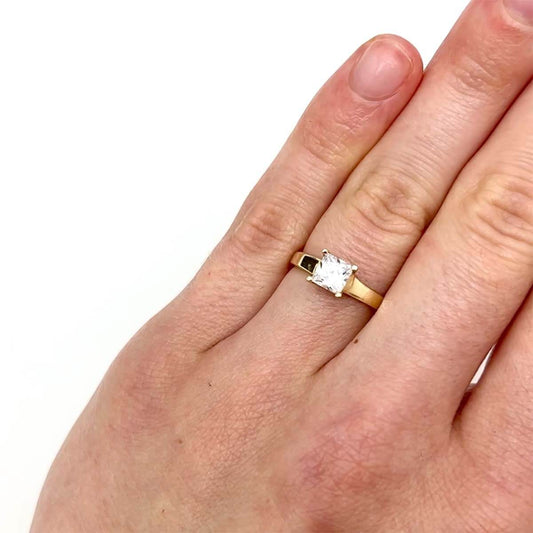
I love it very strong,real gold great quality
Jeezup da goatVerified buyer
Time to decide, in your own space.
I love it very strong,real gold great quality
Jeezup da goatVerified buyer
Really beautiful watch! Absolutely love it!
Marianne ClarkeVerified buyer


Updated November 1, 2026
The quick answer
A magnet cannot prove that jewelry is real gold or tell you its karat. Pure gold is not magnetic, but many non-gold materials are not magnetic either. Treat the result as one clue, then have an uncertain piece assessed professionally.
| What you notice | What to do next |
|---|---|
| No attraction | Do not treat this as proof of gold. Check the material description, markings and purchase records. |
| Attraction around the clasp only | Ask a jeweler to assess the clasp separately from the chain. Components can differ from the main body. |
| Strong attraction across the main piece | Pause before buying or selling based on an assumed gold value; request a professional material assessment. |
Gold purity, surface finish and construction describe different things. A karat describes gold content; “gold-plated” describes a surface layer; “solid links” describes construction. A hollow chain can still be made from a genuine gold alloy. None of these distinctions can be settled with a magnet.
Look for a readable karat or fineness mark, then compare it with the seller’s written description. A stamp is useful information, not an independent guarantee. Photograph the mark and keep your invoice if you need to ask about a particular piece.
Skip flame, scratch and household-chemical experiments. Do not apply testing acid to a finished piece at home: the test can damage the surface or nearby materials, and interpreting it takes care. Ask a qualified jeweler which method suits your item.
Professionals may combine visual inspection with X-ray fluorescence (XRF), electronic testing or other methods. A surface reading needs interpretation: GIA has documented cases where a higher-karat gold coating affected XRF results from a lower-karat gold base. Tell the assessor if plating, repairs or mixed components are possible.
Check the individual listing rather than assuming every item in a store has the same materials or paperwork.
Buying gold? Start with the stated karat.
Browse 10K gold jewelry, 14K gold jewelry or 18K gold jewelry, then check the exact piece's construction and measurements. A karat label and a magnet result answer different questions.
No. It does not measure gold purity.
No. A non-magnetic base can still carry a gold coating.
No. Link construction requires its own assessment.
Comparing chains? Start with our 10K gold chains or 14K gold chains, and read the solid-link or hollow construction stated on each listing. For a question about a WJD item, contact us with the product link so we can address that exact piece.
Read next: solid versus hollow chain construction and 10K, 14K and 18K gold.
Further reading: The Royal Mint: gold-testing limitations; GIA: gold plating and XRF results.
Available on every eligible order
Available on every eligible order
Enjoy free shipping on U.S. orders. Available shipping services, upgrade prices and destination-specific options are shown at checkout.
Most standard orders ship within 2 business days of being placed. Processing time is the time we need to prepare your order before handing it to the carrier. Business days are Monday through Friday, excluding U.S. public holidays.
Watches, made-to-order jewelry and customer-requested personalization, such as engraving or photo installation, typically require 3 business days of preparation before shipment.
These processing windows are estimates, not guaranteed dispatch dates. Occasionally, unexpected circumstances may require more time. If your order has not shipped after the applicable 2- or 3-business-day preparation window, contact us with your order number for an update.
Delivery time is the time your shipment spends in transit after dispatch. Expedited, two-day and next-day shipping services apply to transit time and do not shorten order processing.
When planning for a gift or a specific occasion, allow time for both preparation and delivery. Contact us before ordering if you need help with a particular deadline.
Payment is charged when you place your order, not when it ships.
We email your tracking details when your order ships. You can also check your order status. If you cannot find your shipping email, check your spam folder or contact hello@wjdexclusives.com with your order number.
Available international shipping services and rates are shown at checkout. Delivery timing depends on the destination and may be affected by customs clearance.
International orders may be subject to import duties, taxes and customs charges. These charges are the buyer’s responsibility. Please check with your local customs office for details.
Some high-value shipments require a signature upon delivery. Please arrange for someone you trust to receive and sign for the package when required.
Express services do not deliver to PO boxes. For APO and FPO addresses, we ship through USPS; onward delivery timing depends on military mail services. Contact us if you need help confirming a shipping option for your address.
To request an address change or cancellation, contact hello@wjdexclusives.com as soon as possible with your order number. We will check whether the request can still be accommodated.
If your order has already shipped, eligible items can be returned under our Return & Exchange Policy. Permanent personalization requested by you, such as engraving or photo installation, is final sale.
If you refuse delivery, your refund will be reduced by shipping costs, including return postage and any duties or taxes paid by WJD. Please contact us before refusing a shipment so we can help with the appropriate next step.
Contact our Customer Care Team for help with shipping options, product preparation times or an existing order.
Return your item unused within 30 days of delivery for a full refund. Watches are included, including pre-owned watches and watches customized by WJD before purchase.
Items permanently personalized or modified at your request, such as engraving or photo installation, are final sale. Gift cards are also non-returnable.
Your item must be unused and in the same condition as when it was delivered, with everything originally included. You may carefully inspect it indoors, but please do not wear or alter it.
For pre-owned watches, this means no additional wear or changes after delivery. Watches must have no new scratches, clasp marks, strap wear or other signs of use. Please contact us before arranging sizing or other adjustments if you may wish to return the item.
Items returned used, altered after delivery or incomplete do not meet these return conditions. Contact us before sending back an item if you are unsure whether it qualifies.
WJD-customized watches are returnable. A watch is not final sale simply because WJD fitted a custom dial, bezel, bracelet or other components before offering it for sale. The same 30-day return window and unused-condition requirements apply.
Permanent changes requested by you are final sale. This includes engraving, photo installation and other permanent personalization or modifications made specifically at your request.
After we receive and inspect your eligible return, we issue a full refund with no restocking fee. Please allow 5–7 business days after receipt for return processing.
Refunds go back to the original payment method. Purchases paid with a WJD gift card are refunded as store credit. Trade-in purchases are handled through store credit or an exchange.
If you prefer an exchange, let our Customer Care Team know when arranging your return.
U.S. returns: We provide a prepaid return label for eligible domestic returns.
International returns: Customers are responsible for return shipping. Follow our return instructions and identify the shipment as returned goods on the customs paperwork.
Orders delivered between November 1 and December 31 may be returned through January 31. The same condition requirements and final-sale exceptions apply.
If your item arrives damaged or incorrect, contact us within 10 business days of delivery and before the item is worn, sized, customized or altered.
Contact our Customer Care Team for return instructions, exchange assistance or questions about your order. If you need a repair outside the return window, contact us for an assessment and quote.
Last updated: October 20, 2026.
We stand behind the workmanship of the jewelry and watches we sell. Our limited warranties cover qualifying defects, with coverage based on the item you purchased.
Warranty coverage is not insurance. It protects against covered defects. It does not cover accidental damage, normal wear and tear, fire, theft, or loss of the item.
All watches purchased from WJD Exclusives include a 1-year seller warranty covering qualifying mechanical or functional defects. Coverage and warranty service are provided by WJD Exclusives. Contact us directly if your watch needs attention.
Normal aging and wear, routine maintenance, and damage caused by impact, misuse, or exposure to water are not covered. A watch stopping or running incorrectly should be assessed to determine the cause; it does not automatically mean the issue is excluded.
Diamond-set watches include lifetime diamond replacement coverage when a diamond becomes loose or falls out because of a defect in its setting or workmanship. Jewelry stones that loosen or fall out because of a manufacturing defect are covered under the lifetime jewelry warranty.
This coverage applies to qualifying defects in the piece. It does not cover chipped or broken stones from an accident, stone loss caused by impact or worn, bent, or damaged settings, or the loss or theft of the entire item. We inspect the piece to determine the cause before confirming coverage.
Jewelry purchased from WJD Exclusives is covered against manufacturing defects in materials and workmanship. If an issue is caused by a covered defect, we will repair or replace the item at no cost.
Examples include a structural flaw, a defective connection, or a setting that fails because of how the piece was made. A chain breaking or a clasp loosening is assessed based on its cause: a manufacturing defect is different from damage caused by pulling, snagging, or everyday wear.
If a stone feels loose or a setting looks damaged, stop wearing the piece and contact us to help prevent further damage.
Warranty service addresses covered defects. Returns for an unused purchase are handled separately under our 30-day return policy.
This limited warranty gives you specific legal rights, and you may also have other rights that vary by state. Nothing in this policy limits rights that cannot be excluded under applicable law.
Set the date directly, without moving the hands through a full day.
Shop all quickset watchesThis watch has no custom design changes, such as diamonds added after manufacture.
Shop all non-customized watchesEach link has a solid metal core. That gives it more heft than a hollow link of the same size and metal.
Shop all solid-link jewelry